The Indian startup ecosystem is thriving like never before. From SaaS unicorns to D2C brands and fintech disruptors, India is home to over 100,000 startups as of 2025, according to DPIIT data. But behind every innovative product and growth milestone lies a less glamorous — yet absolutely critical — component: accounting.
Many startup founders find it challenging to manage accounts, navigate tax laws, and maintain compliance with India's complex regulatory framework. That’s where outsourcing accounting for startups in India emerges as a powerful solution. Outsourcing to an accounting firm is basically hiring a third-party professional firm like Jordensky to handle financial tasks like bookkeeping, tax preparation, and financial reporting. Let’s explore why this move makes strategic sense and how successful Indian startups are already leveraging outsourced accounting partners to scale faster and smarter.
Why Accounting Is Critical for Indian Startups
Financial Clarity Drives Better Decisions
During the initial phases, cash flow plays a crucial role. Startups must make every rupee work harder — whether it’s allocating marketing budgets, negotiating vendor terms, or planning runway for the next funding round. Outsourced accounting professionals offer accurate financial reports, real-time dashboards, and actionable insights that empower founders to make data-driven decisions.
For example, Dunzo, an Indian hyperlocal delivery startup, scaled rapidly by keeping tight control over operational cash flows. Access to expert financial forecasting helped its leaders balance growth with capital efficiency.
Compliance with India’s Complex Regulations
The Indian regulatory environment presents significant challenges. Startups need to comply with:
- Companies Act, 2013
- Income Tax Act (including TDS deductions and advance tax payments)
- Goods and Services Tax (GST) regulations
- MCA filings (ROC annual returns, DIR-3 KYC, etc.)
Non-compliance can result in hefty fines, legal troubles, and even loss of investor confidence. Having a specialised third-party professional firm handle compliance ensures startups maintain legal compliance while concentrating on their core growth areas.
Investor Confidence and Due Diligence
Investors today demand robust financial hygiene. Clean, accurate books reflect a startup's maturity and operational discipline, making it easier to secure funding rounds. For instance, Razorpay's impressive financial governance helped it navigate multiple successful funding rounds, earning investor trust along the way.
Key Benefits / Advantages of Outsourcing Accounting in India
Cost Savings & Operational Efficiency
Hiring a full-time CFO or finance team can be prohibitively expensive for early-stage startups. Outsourcing accounting offers access to expert services — often at a 70–80% lower cost than building an in-house department.
- No overheads like office space or employee benefits
- Pay-as-you-grow pricing models
- Avoid costly compliance mistakes
For example, an early-stage SaaS startup based in Bengaluru saved nearly ₹10 lakh annually by outsourcing bookkeeping, tax filing, and payroll processing.
Access to Specialized Expertise
India’s tax codes are frequently updated. Outsourced accountants stay abreast of evolving laws — from GST input credit rules to international transfer pricing regulations for startups dealing with foreign investors.
Many accounting firms also provide:
- Virtual CFO services
- Investor reporting support
- Valuation advisory for ESOPs and fundraising
Focus on Core Business Activities
Founders can focus on product development and customer acquisition instead of wrestling with GST filings or TDS reconciliations.
- Product development
- Customer acquisition
- Building investor relations
- Entering new markets
As the co-founder of a Mumbai-based healthtech startup shared, “Outsourcing our finances freed up my mental bandwidth to raise our Series A while our accountant ensured we stayed 100% compliant.”
Scalable Services
As startups grow, so do their accounting needs. Outsourced partners offer flexibility:
- Add various types of Accounting services as business complexity increases
- Handle cross-border transactions and compliance
- Support for IPO readiness or M&A due diligence
Types of Outsourced Accounting Services Available for Indian Startups
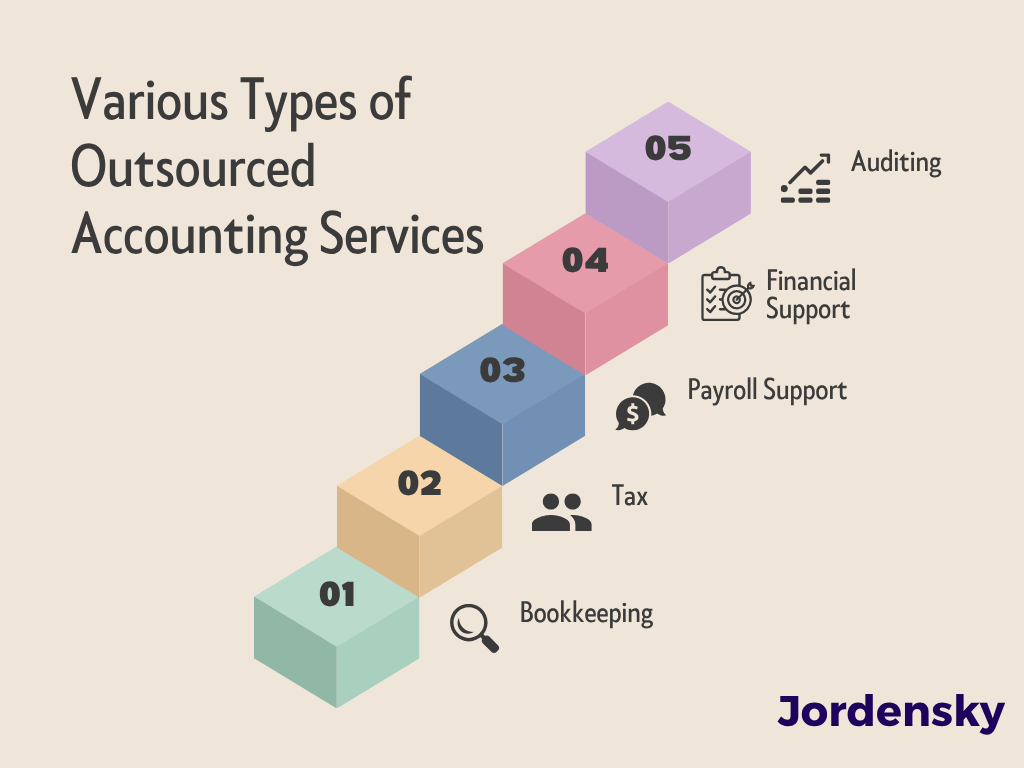
When founders choose to outsource accounting for startups in India, they gain access to a wide range of specialised services tailored to their specific stages of growth.
Bookkeeping
- Maintaining day-to-day financial records
- Recording transactions, sales invoices, vendor bills, and payment receipts
- Reconciling bank accounts and credit card statements
Financial Reporting
Preparing essential financial statements such as:
- Profit & Loss Statements
- Balance Sheets
- Cash Flow Statements
- Generating monthly management reports for founders and investors
Tax Preparation and Filing
Accurate calculation of tax liabilities
Filing of:
- Income Tax Returns (ITR-6 for companies)
- TDS returns (Form 24Q, 26Q)
- GST returns (GSTR-1, GSTR-3B)
- Ensuring timely submissions to avoid penalties
Payroll Processing
- Calculating employee salaries, deductions, and statutory contributions
- Filing Provident Fund (PF), ESIC, and Professional Tax returns
- Disbursing employee payments accurately and on time
Audit Support
- Assisting with internal and statutory audit
- Preparing audit-ready books
- Providing supporting documentation required by auditors or due diligence teams
With these services, startups can establish a financial foundation that bolsters both compliance and growth, providing founders with a sense of security.t
Compliance Requirements Specific to Indian Startups
Startups in India deal with multiple compliance layers depending on their stage, sector, and funding status.
Mandatory Filings
- GST Returns (GSTR-1, GSTR-3B)
- TDS Returns (Form 24Q, 26Q)
- Income Tax Returns (ITR-6 for companies)
- MCA Annual Filings (AOC-4, MGT-7)
Startup India & DPIIT Benefits
Many startups eligible under the Startup India scheme enjoy:
- Tax exemption for 3 consecutive years (Section 80-IAC)
- Angel tax exemption under Section 56(2)(viib)
- Self-certification for labor laws
However, these benefits require strict documentation, timely filings, and accurate recordkeeping — areas where expert accounting guidance is invaluable.
FEMA & RBI Compliance
For startups raising foreign capital or issuing convertible notes, compliance with FEMA and RBI reporting becomes critical:
- FC-GPR filing for share allotments
- APR filings for outward remittances
- ODI regulations for global expansion
Non-compliance here can derail future funding rounds and attract regulatory scrutiny.
Common Pitfalls in Startup Accounting
Despite their best intentions, many founders fall into these traps:
Non-Compliance Penalties
Missing deadlines for GST returns, TDS filings, or MCA submissions can result in:
- Late filing fees
- Interest penalties
- Legal notices
Cash Flow Mismanagement
Without expert oversight, startups may:
- Overspend on growth at the cost of profitability
- Underestimate tax liabilities
- Face sudden liquidity crunches
Inaccurate Financial Reporting
Inconsistent bookkeeping leads to:
- Investor mistrust
- Failed audits
- Delayed funding
Missed Tax Benefits
Startups often overlook:
- Section 35 deductions for R&D expenses
- SEZ or Export incentives under MEIS/SEIS schemes
- Input tax credits under GST
How to Choose the Right Accounting Partner in India
When you decide to outsource accounting for startups in India, selecting the right partner is crucial. Jordensky is a professional accounting and CFO service firm and is ranked as a top outsourced accounting and CFO firm in India by global companies and Indian startups and has worked with than 500 clients ranging from early-stage to growth-stage companies and MSME's in India and Foreign countries.
Experience with Indian Startups
Choose firms that:
- Understand DPIIT guidelines
- Handle foreign funding compliance
- Have sector-specific knowledge (SaaS, fintech, D2C, etc.)
Technology-Driven Solutions
Top firms leverage:
- Zoho Books
- QuickBooks India
- TallyPrime with cloud access
Technology ensures real-time visibility, better accuracy, and automated compliance reminders.
Transparent Pricing
Look for:
- Fixed fee models for predictability
- Tiered services based on company size
- No hidden charges for filings or consultations
Client References
Always request:
- Case studies
- Client testimonials
- Startup founders willing to share their experience
Case Studies
SaaS Startup: Scaled Faster with Virtual CFO
A Chennai-based SaaS startup preparing for its Series A availed a virtual CFO service from Jordensky. They received monthly MIS reports, investor-ready financials, and audit support — all without adding to their payroll burden.
D2C Brand: Reduced Compliance Costs
A Delhi-based D2C beauty brand outsourced tax filings, GST reconciliations, and vendor payment audits to Jordensky. This allowed them to reinvest saved funds into influencer marketing, directly driving sales growth.
Fintech Startup: Navigated RBI Compliance Smoothly
A Mumbai-based fintech used outsourced accounting to Jordensky to handle complex RBI guidelines on foreign investments and NRI fund inflows, ensuring seamless cross-border transactions and clean audit trails.
Frequently Asked Questions
Que : Should Indian startups outsource accounting?
Ans: Absolutely. Outsourcing offers cost savings and expert compliance and allows founders to stay focused on core growth priorities.
Que : What are the risks of not outsourcing accounting?
Ans : Non-compliance, tax penalties, incorrect filings, failed audits, and lost investor confidence are just a few risks.
Que :How much does outsourced accounting cost in India?
Packages typically start from ₹5,000 to ₹50,000+ per month, depending on services like bookkeeping, tax filing, virtual CFO, and investor reporting.
Que: What should I look for in an outsourced accounting firm?
Seek partners with startup experience, strong tech adoption, transparent pricing, and solid client references.
Conclusion: Take Charge of Your Startup’s Financial Future
Outsourcing accounting isn’t just about offloading paperwork — it’s a strategic investment in your startup’s scalability, compliance, and investor readiness. With India’s regulatory landscape constantly evolving, accounting expert in Bangalore, like Jordensky, can help ensure your finances are audit-ready, tax-optimized, and fully compliant.
👉 Ready to simplify your startup’s finances?
Contact our expert team today for a free consultation and discover how Jordensky can assist you with outsourced accounting for startups in Mumbai to power your next phase of growth.