What is a Cash Flow Problem and Why It Cripples Your Business?
Cash flow is the movement of money into and out of your business on a daily basis. Money comes in from customers and goes out for salaries, rent, GST, EMIs, vendor payments, and other operating expenses.
A cash flow problem occurs when cash inflows are delayed or insufficient compared to cash outflows. Even profitable and fast-growing businesses can face this issue, especially when revenues are stuck in receivables while expenses must be paid on time.
Most Indian entrepreneurs realize cash flow problems during supplier follow-ups or payment delays—not in reports. Over time, poor cash flow can strain vendor and employee relationships, cause statutory penalties, and force costly borrowing, ultimately crippling an otherwise healthy business.
Common Causes of Cash Flow Problems in Indian Companies
Every founder's story is unique, but the root causes of cash flow pain tend to repeat. Understanding them is the first step to fixing them.
1. Delayed Receivables and Weak Collections
If you sell to large corporates, distributors, or government entities, you already know the story: credit terms of 30 days become 60, 90, or even 120 days in reality. MSMEs across India routinely wait months for their money while still funding operations.
Typical patterns:
- No clear credit policy or standard terms
- Collections driven by last-minute calls from the founder or accountant
- No structured follow-up for overdue invoices
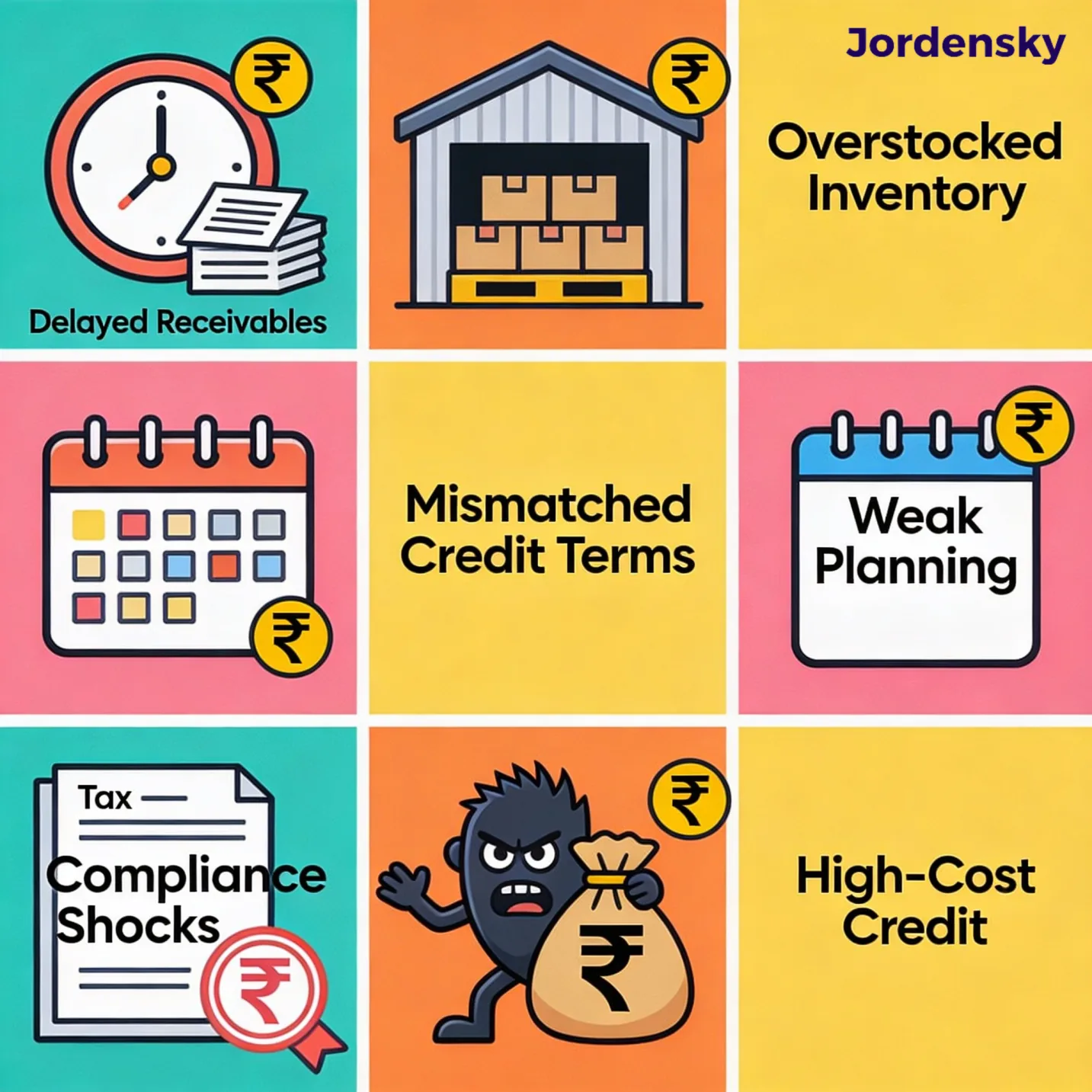
2. Inventory Mismanagement and Overstocking
For manufacturing, trading, and D2C brands, inventory is often the biggest silent cash sink.
Common issues:
- Overbuying raw materials "just in case"
- Holding slow-moving or obsolete stock because "it will sell someday"
- No visibility into inventory aging, leading to dead stock
3. Mismatch in Customer and Supplier Credit Terms
Many businesses give customers 60–90 days credit but pay suppliers in 15–30 days. This structural mismatch is a classic working capital trap.
Symptoms:
- You pay your vendors before collecting from clients
- You need to "bridge the gap" using OD, credit cards, or personal loans
- The bigger you grow in sales, the tighter your cash gets
4. Weak Financial Planning and Lack of Runway Visibility
Many Indian founders rely on bank balance checks instead of proper cash planning. Without cash flow forecasts, burn analysis, or runway tracking, funding gaps are noticed too late, and decisions are made under pressure.
Well-run businesses use 6–12-month cash flow forecasts, track monthly burn and runway, and plan for different scenarios. This is where a finance partner like Jordensky helps—by building structured cash models so founders spot problems months before they turn into crises.
5. Compliance Shocks and Tax-Related Cash Drains
In India, compliance failures directly hurt cash flow.
Common problems:
- GST, TDS, PF/ESI, and advance tax aren't built into monthly budgets
- Penalties and interest on late payments drain already tight cash
- Under Section 43B(h), delayed MSME supplier payments become non-deductible expenses, increasing your tax liability
The impact: Missing a single GST or advance tax payment can wipe out your working capital for the entire month.
6. Over-Reliance on High-Cost or Informal Credit
When bank limits are insufficient or unavailable, many businesses turn to:
- High-interest NBFC loans
- Informal lenders
- Personal loans and credit cards of promoters
These sources provide short-term relief but add heavy, fixed monthly EMIs. Over time, interest eats into margins and your cash flow problems deepen instead of resolving.
How to Identify Cash Flow Problems Early
Identifying cash flow problems early can save a business from serious trouble. Here are the key warning signs and methods to catch issues before they become critical:
Monitor your cash conversion cycle - Track how long it takes to convert inventory and receivables into cash. If this cycle is lengthening (you're taking longer to collect payments or inventory is sitting longer), it's an early red flag that cash flow issues are developing.
Watch your bank balance trends – Don't just check if you have money today. Look at the pattern over weeks and months. If your balance is steadily declining or you're consistently ending months lower than you started, there's a problem brewing even if you're not in crisis yet.
Track your accounts receivable aging – Review which invoices are outstanding and for how long. If more invoices are moving into the 60+ or 90+ day categories, or if the same customers are consistently late, your cash flow will suffer soon.
Compare actual vs. projected cash flow - Create a simple cash flow forecast for at least 3 months ahead. If reality consistently falls short of your projections, investigate why. The gap between expected and actual cash is often the first sign of trouble.
Notice if you're constantly juggling payments - If you find yourself regularly deciding which vendor to pay this week versus next week, or delaying your own salary, these are clear signs you're already in cash flow stress.
Monitor your payment cycles - Are you paying suppliers later than usual? Requesting extended credit terms? These coping mechanisms indicate underlying cash flow pressure.
Check your inventory turnover ratio - Calculate how quickly inventory sells. If this ratio is slowing down, you have capital locked up that should be flowing through your business.
Look at your current ratio - This is current assets divided by current liabilities. If it's falling below 1.5 or declining over time, you may struggle to meet short-term obligations.
Review your operating expenses as a percentage of revenue - If this percentage is increasing, your costs are growing faster than income, which will eventually create cash problems.
The key is being proactive rather than reactive. A weekly 15-minute review of these indicators can help you spot problems weeks or months before they become emergencies.
How to Fix Cash Flow Problems
Fixing cash flow is not about one big move; it's about many small, disciplined actions working together.
Phase 1: Diagnose the Problem
Start by understanding exactly where your cash flow issues originate. Review your cash flow statements, identify the gap between inflows and outflows, and pinpoint whether the problem is delayed receivables, excess inventory, high expenses, or a combination. This diagnosis tells you which of the following actions to prioritize.
Phase 2: Speed Up Receivables
Reach out to customers with outstanding balances - Create a prioritized list starting with the largest and oldest invoices. Make personal calls rather than just sending emails. For Indian businesses, building personal relationships often makes collections easier. Offer incentives like small discounts for immediate payment, or set up payment plans for customers facing genuine difficulties.
Improve pricing, terms, and monetization - Review your payment terms and tighten them where possible. Consider requiring deposits for new orders, shorter credit periods (30 days instead of 60), or milestone-based payments for large projects. Evaluate whether your pricing adequately covers costs and payment delays. Don't be afraid to adjust prices if you're consistently dealing with cash flow stress.
Phase 3: Control Expenses
Tighten expenses and redesign your cost structure - Conduct a thorough expense audit. Categorize costs as essential, important, or discretionary. Cut discretionary spending immediately. Renegotiate contracts for rent, utilities, and services. Look for operational efficiencies like reducing waste, optimizing processes, or automating tasks. Consider whether fixed costs can be converted to variable costs.
Negotiate favorable terms with suppliers and creditors - Approach your suppliers honestly about your situation and request extended payment terms. Many suppliers prefer maintaining a relationship over losing a customer. Prioritize payments to critical suppliers while negotiating with others. For loans and credit facilities, discuss restructuring options with your bank.
Phase 4: Unlock Hidden Cash
Unlock cash from inventory and assets - Identify slow-moving or obsolete inventory and liquidate it, even at discounted prices. Review assets that aren't generating value and consider selling or leasing them. Explore sale-and-leaseback arrangements for equipment or property if applicable. Consider invoice discounting to convert receivables to immediate cash.
Phase 5: Forecast and Build Reserves
Create a rolling 12-week cash flow forecast and update it weekly. This helps you anticipate shortfalls and make proactive decisions. Track actual performance against forecasts to improve accuracy. Once you've stabilized, begin building a cash reserve equal to at least 3 months of operating expenses. This buffer protects against future disruptions.
Implementation Priority
Start with quick wins (collections and expense cuts), then move to medium-term fixes (supplier negotiations, inventory liquidation), and finally address structural issues (pricing, terms, forecasting systems). The key is taking action immediately while building toward sustainable long-term health.
This systematic approach addresses both the symptoms and root causes of cash flow problems, giving your business the best chance of recovery and future stability.
(FAQs)
1. Can a profitable business still face cash flow issues?
ANS Yes. A business can be profitable on paper but still struggle with cash if payments are stuck in receivables or inventory.
2. Why are cash flow problems dangerous for businesses?
ANS Poor cash flow leads to delayed payments, strained vendor and employee relationships, penalties on statutory dues, and costly borrowing.
3. What are the common causes of cash flow problems in India?
ANS Delayed customer payments, excess inventory, mismatch in credit terms, lack of cash planning, tax compliance shocks, and high-interest borrowing.
4. How can cash flow problems be fixed?
ANS Speed up collections, control expenses, negotiate better supplier terms, liquidate slow inventory, and use cash flow forecasting.
5. What is a cash flow forecast?
ANS It is a projection of future cash inflows and outflows that helps businesses spot shortages early and plan ahead.
6. When should I seek professional help?
ANS If your business is profitable but always short of cash or relying on loans to run operations, expert help is needed.
Conclusion: Don't Wait for a Cash Crisis to Act
If your business is profitable on paper but always short of cash, you are not alone—and you are not stuck. By understanding the common causes of company cash flow problems, identifying early warning signs, and implementing practical fixes, you can move from constant firefighting to confident, proactive control.
Start with three steps this month:
- Review your receivables aging and talk to every major overdue customer.
- Sit down with key suppliers to discuss realistic, mutually beneficial terms.
- Build a simple 6–12 month cash flow forecast and calculate your runway.
If this feels overwhelming, you do not have to figure it out by yourself.
Jordensky works with Indian founders and MSME owners every day to diagnose cash flow issues, streamline collections, optimize working capital, and build robust forecasting models that support real growth. If you're worried that cash flow problems can cripple your business, now is the time to act—before a crunch becomes a full-blown crisis.
Ready to Take Control of Your Cash Flow?
Don't let cash flow problems stop your business for another day. Start using these strategies right now, and you'll see your business go from just reacting to cash flow issues to actively managing them.
Visit Jordensky.com for expert financial help and tools made for your small business!
Share your cash flow stories – both tough times and successes – in the comments below. What's the biggest lesson your business has taught you about cash flow?