


Your P&L tells you what happened last month.
MIS tells you what to do next month. That's the difference between accounting and financial intelligence — and it's the difference between businesses that react and businesses that plan.
Whether you're a startup tracking burn rate for investors or a manufacturer monitoring production costs — Jordensky delivers monthly MIS that tells you exactly where the money is going and what to do about it.
Real-time dashboards. Investor-ready reports. No more Excel chaos.
Trusted by 200+ growing businesses across India




















MIS tells you what to do next month. That's the difference between accounting and financial intelligence — and it's the difference between businesses that react and businesses that plan.
We build custom dashboards, track key metrics, spot trends before they impact you — whether that's monthly burn rate or variance, project margins, or production cost per unit and inventory turnover for a manufacturing company.
What questions do you need answered every month? What metrics drive your business? We design the reporting around your decisions, not around generic templates.
A simple, yet effective three-step process.
Big or small, we will get all your financial data in order, and in the cloud to ensure Jordensky plays a role to provide accurate and timely MIS to the management and to the investor for decision making. We'll pull, spit spot results, save money, and grow revenue.
Your dedicated finance manager builds a reporting framework around your industry and stage. Startups get investor-ready dashboards with burn, runway, and unit economics. Manufacturers get production costing, inventory aging, and department-wise P&L. No two MIS setups are the same.
By the 10th of every month, your MIS lands in your inbox. Then your finance manager walks you through it — what changed, what's trending, and what needs attention. Your investors or board members can access a live dashboard anytime.
That's the Jordensky way.
Actionable insights. Timely reviews. Smarter decisions.
Not just a PDF in your inbox. Your finance manager walks you through every report — what the numbers mean, what's changed, and what actions to take. For startups, this includes investor readiness checks. For manufacturers, it's about efficiency and revenue.
Your startup isn't a bank. MIS charts, LTV:CAC, cohort conversion, runway, E-commerce metrics (ROAS, AOV) and inventory turnover. Manufacturers track production cost per unit, capacity utilization, and raw material consumption. We track what matters to YOUR business.
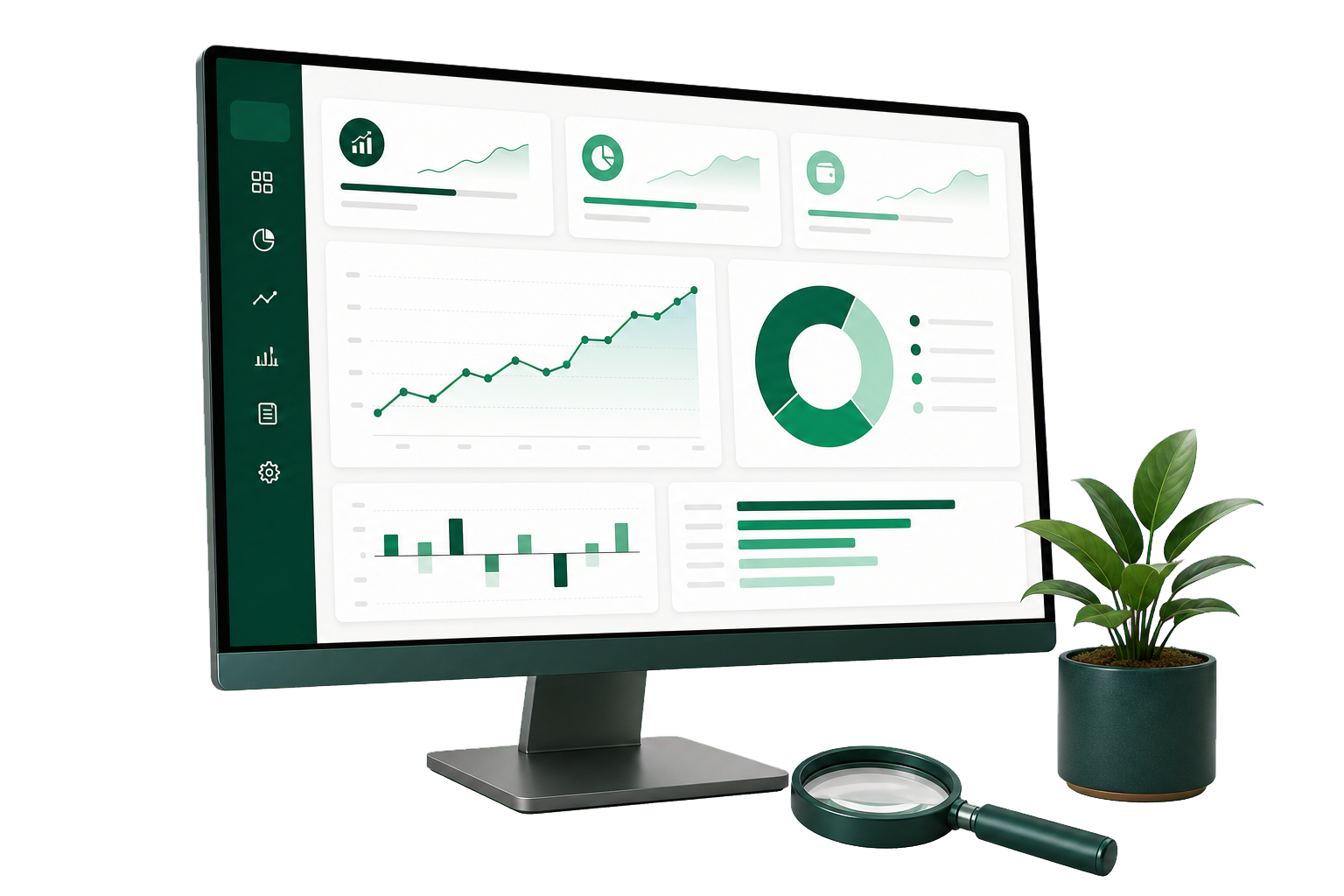
Access your financial data in real time through visual dashboards. Track cash position, revenue trends, payable timelines, and key metrics — updated daily, not monthly. Share viewing access with your investors or board.
Choose a convenient time to chat with our accounting experts and get the answers you need to take the next step.
Schedule a Call
We will liaise directly with your previous accountant to get all the information required, and migrate your accounting software subscription and data all in one go. Your transition to Jordensky is effortless.

Monthly P&L, balance sheet, and cash flow — formatted for board meetings and investor updates. Includes burn rate analysis, runway projections, and revenue cohort breakdowns. Ready by the 10th of every month.

Track cost per unit, raw material consumption vs budget, production capacity utilization, inventory aging, and department-wise P&L. Designed for factory owners and operations heads who need to know what's happening on the floor — in financial terms.

No more waiting for month-end. Access live dashboards showing cash position, receivables aging, expense trends, and custom KPIs. Share view-only links with investors, board members, or your management team.

Automated reconciliation across Amazon, Flipkart, Shopify, and Razorpay. Track ROAS by channel, contribution margin by product, and true profitability after marketplace fees and returns.


Revenue, COGS, gross margin, operating expenses, EBITDA, and net profit. Broken down by product line, department, or business unit. Trend analysis vs prior months.

Where cash came in, where it went out, what's your runway. Critical for startups managing investor capital. Includes cash flow forecast for the next 3-6 months.

Monthly comparison of budgeted vs actual numbers across every line item. Variance commentary explaining WHY numbers differ — not just flagging that they do.
GST filing status, TDS deposits, advance tax, ROC compliance, PT — all in one view. Never miss a deadline. Colour-coded: green (done), yellow (upcoming), red (overdue).

For startups: LTV, CAC, MRR, ARR, churn, net revenue retention. For manufacturers: cost per unit, yield rate, capacity utilization, inventory turnover. Industry-specific metrics that matter.

Who owes you money and how long they've owed it. Who you owe and when it's due. Working capital trends and recommendations for optimizing your cash conversion cycle.
Jordensky’s tech-enabled human team performs monthly accounting to deliver books that you can trust. With jordensky, accounting is a breeze
Get your accurate booksNever miss another tax deadline. Our tax professionals will handle all of your taxes with ease. Taxes are simple.
Be always compliantIt is difficult to manage the startup and finance functions. Our top-tier CFOs will collaborate with your team to make sound financial decisions.
Get CFO supportAn MIS (Management Information System) report is a structured financial and operational report that transforms your raw business data into actionable insights. Unlike basic accounting statements that tell you what happened, MIS reports tell you what to do next — by tracking KPIs, analyzing trends, and highlighting variances that need attention.
The most common types include: P&L analysis (profitability by product/department), Cash flow and burn reports (critical for startups), Budget vs actual variance reports, Statutory compliance dashboards (GST, TDS, ROC), Unit economics dashboards (LTV, CAC, MRR for SaaS), Production cost reports (for manufacturing), and AP/AR aging reports. At Jordensky, we customize the report mix based on your industry and decision-making needs.
Predictive MIS uses your historical financial data to forecast future outcomes — revenue projections based on sales trends, cash runway based on current burn rate, or production costs based on material price trends. At Jordensky, predictive reporting is included in our Growth and Custom plans, giving founders and factory owners a forward-looking view instead of just a rearview mirror.
A budget MIS report compares your actual spending against your planned budget — line by line, department by department. More importantly, it includes variance commentary: not just showing that marketing overspent by ₹3L, but explaining why and recommending adjustments for next month. This is especially critical for funded startups with investor-defined budgets and for manufacturers managing production cost targets.
We will reach out within one business day.


