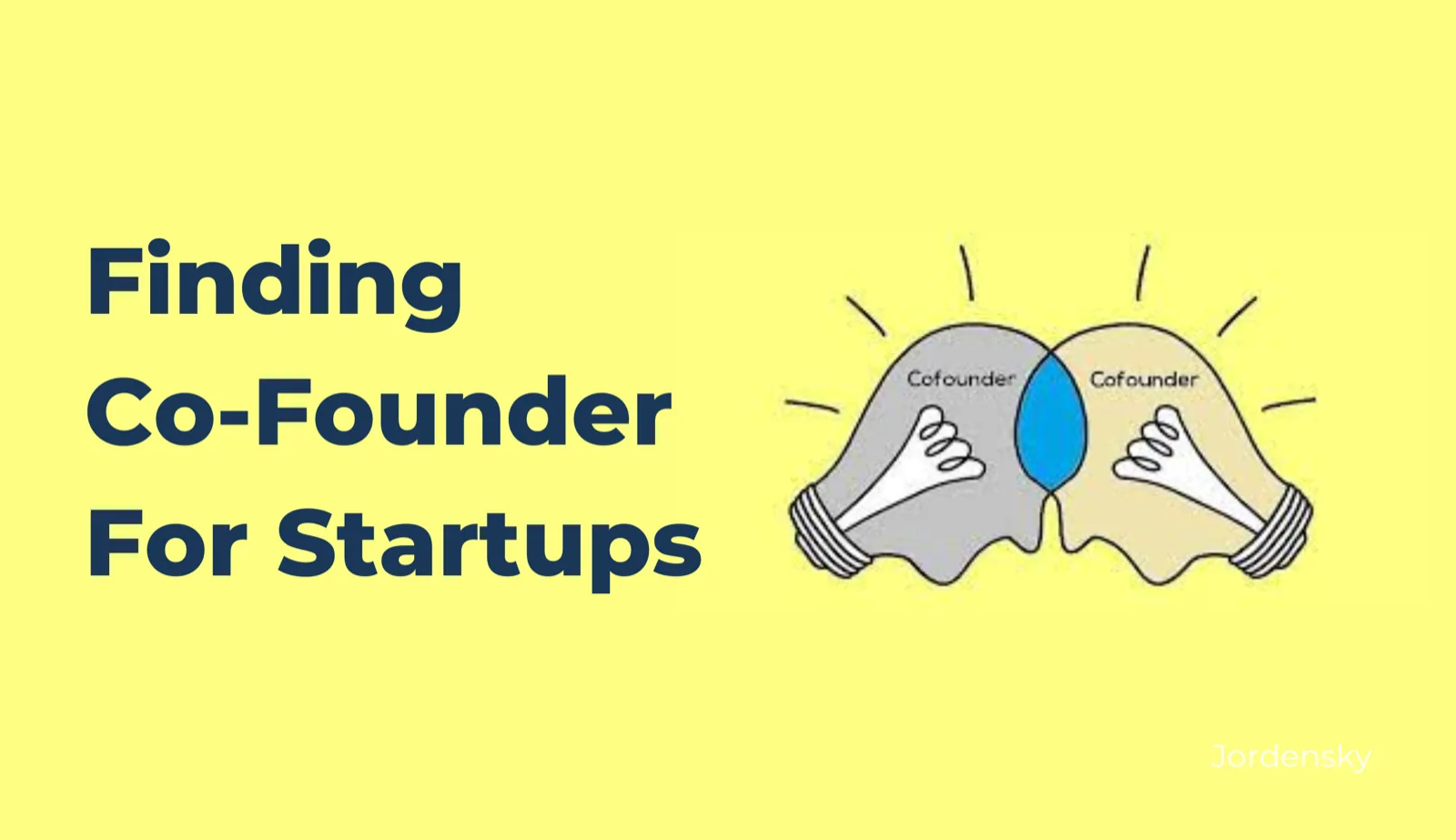
Whether you need a co-founder depends on the gaps you can't fill yourself. In India, most large startups were built by teams rather than solo founders. A PrivateCircle Research analysis of 113 Indian unicorns, published in April 2024, found that 78% were started by two or more co-founders and only 22% by solo founders.
That number is a pattern, not a rule. Ali Tamaseb's study of more than 200 billion-dollar startups for his book Super Founders found that the number of co-founders was not correlated with success. What matters is whether a second founder closes a real gap: technical depth, distribution, operations or capital-raising.
This guide covers where to find a co-founder in India, what to look for, and the financial and equity questions that most co-founder guides leave out, which is where founding teams most often break down.
Do You Actually Need a Co-Founder?
Not every business needs one. Plenty of strong companies are built by solo founders who hire senior people around them instead. A co-founder makes sense when:
- There is a core skill gap you can't hire for yet. A non-technical founder building a product-led company usually needs a technical co-founder, because early engineering decisions are too important to outsource.
- The workload needs two owners. Selling, building and raising money at the same time is more than one person can sustain for long.
- Investors will expect it. Institutional investors often ask why a solo founder hasn't attracted a partner, particularly in deep-tech and B2B software.
If none of these apply, a strong first hire with meaningful ESOPs may give you the same capability without splitting ownership and control.
Where to Find a Co-Founder in India
Your existing network first. Former colleagues, university batchmates and friends-of-friends convert far better than cold platforms, because you already know how the person works under pressure. Many well-known Indian founding teams started this way: Sachin and Binny Bansal had worked together at Amazon before founding Flipkart, and Girish Mathrubootham and Shan Krishnasamy were colleagues at Zoho before co-founding Freshworks.
LinkedIn. Direct outreach and posts in relevant groups work well when you are looking for a specific functional gap, such as a technical co-founder for a non-technical founder.
Structured matching platforms. Y Combinator's Co-Founder Matching platform is the most established and is free to use. CoFoundersLab serves a similar purpose with a different user base.
Founder programmes. Antler runs a residency in India that brings individual founders together to form teams before investing. Accelerators and incubators linked to IITs, IIMs and other institutions are also good places to meet potential partners.
Communities. Indie Hackers and online founder communities are active for early-stage, bootstrapped or pre-funding searches.
What Qualities Actually Matter in a Co-Founder?
Complementary skills, not duplicate ones. Two people with the same strengths and the same blind spots don't cover more ground than one; they just agree with each other more. Zerodha's co-founders, brothers Nithin and Nikhil Kamath, are a well-known example of complementary roles: one focused on building and running the brokerage, the other on trading and investments.
Aligned risk appetite. A founder who wants to bootstrap conservatively and one who wants to raise aggressively and spend fast will clash on almost every resourcing decision.
Proof that you can disagree productively. Test this before committing, ideally by working on something small together for a few weeks before formalising anything.
The Step Almost Every Co-Founder Guide Skips: Financial Fit
This is where a finance-advisory perspective adds the most. Before incorporating, co-founders should agree in writing on four things.
| Question | What to agree | What goes wrong if you don't |
|---|---|---|
| Equity split | Who owns what at incorporation, and why | Resentment when contributions diverge; investors question unexplained splits |
| Vesting | Commonly 4 years with a 1-year cliff, via reverse vesting | A co-founder who leaves in year one keeps a large stake, blocking future rounds |
| Spending authority | Who can approve spends above what threshold, and who signs off on hires | Friction the first time a real spending decision comes up |
| Salary philosophy | Whether founders draw a salary, how much, and when it changes | One founder reinvests everything while the other needs a market-rate draw |
Equity split and vesting. A 50/50 split with no vesting is one of the most common early mistakes. If one co-founder leaves in year one with 50% of the company, every future investor sees "dead equity" on the cap table, and the remaining founder carries the business while owning only half of it.
The India-specific trap: ESOPs are not a founder fix. In many countries, founders top up or rebalance equity later with stock options. In India, the explanation to Rule 12(1) of the Companies (Share Capital and Debentures) Rules, 2014 excludes promoters from the definition of "employee" for ESOP purposes, with a carve-out for startups up to ten years from incorporation. Founders should hold actual shares from day one, and vesting is usually implemented as reverse vesting: the founder owns the shares upfront, and the founders' or shareholders' agreement gives the company the right to buy back unvested shares at a nominal price if they leave early.
Spending authority. Who can sign a vendor contract above ₹5 lakh? Who approves a senior hire? Undefined authority creates friction the first time a real decision comes up.
Salary philosophy. One of the most common and least-discussed causes of founding-team breakdown is a mismatch here. One co-founder wants to reinvest everything and draw a minimal salary; the other needs a market-rate draw from month one. Neither is wrong, but an unaligned pair finds out during a cash-tight month.
Getting these four things in writing before incorporation, even informally and before a lawyer is involved, prevents most co-founder disputes that later need expensive legal help to unwind.
When a Co-Founder Relationship Becomes a Financial Risk
A founding team without clarity on equity, vesting and spending authority is not just a "communication" risk. It is a structural financial risk that surfaces at the worst moment: in due diligence for a funding round. Investors check specifically for unvested founder equity, undocumented side agreements and undefined decision rights, and treat them as red flags that can delay or reprice a round.
The fix is cheap at incorporation and expensive later. Restructuring equity after a co-founder has left often means negotiating a buy-back, revaluing shares and, where foreign investors are involved, managing FEMA pricing rules on any transfer.
How Jordensky Helps
Jordensky does not run co-founder matching; that is not our expertise. We help with the financial structuring that comes right after you've found the right person: modelling the equity split, setting up a cap table that will survive due diligence, working with your lawyer on vesting and buy-back terms, and putting a simple financial decision-making framework in place from incorporation. When it's time to raise, our guides to finding angel investors and what to do after raising money pick up from there.
If you have found a co-founder and are working out the equity and money questions, talk to Jordensky before you incorporate.
Disclaimer: This article is general information, not legal or financial advice. Co-founder agreements, ESOP eligibility and share buy-backs involve Companies Act and, where relevant, FEMA requirements; consult a qualified lawyer and company secretary for documentation, and a financial advisor for equity structuring.
References
- PrivateCircle Research analysis of 113 Indian unicorns, reported by Outlook Business (April 2024)
- Ali Tamaseb, Super Founders: What Data Reveals About Billion-Dollar Startups (PublicAffairs, 2021)
- Companies (Share Capital and Debentures) Rules, 2014, Rule 12 and explanation to Rule 12(1) (ESOP eligibility; startup proviso)